TNT Audio

Professional Mobile Electronics Since 1997

4803 N Navarro, Victoria, Texas 77904 361-576-6117
  • Home
  • Services
    • Car Audio
    • Custom Installation
    • Marine Audio
    • Vehicle Security
  • About Us
  • Location
  • Contact Us

Understanding Specifications: Car Audio Amplifier Stereo Separation

Amplifier Stereo Separation

We’re back in the lab and working on a few more articles about amplifier specifications in order to wrap up this series. This time, we’re going to talk about the amplifier stereo separation specification. In a nutshell, the stereo separation, or crosstalk, number tells us how much of an audio signal leaks from one channel of an amplifier to the other. Of course, for the number to exist, you need to be looking at a stereo amplifier and in most cases, one that will drive a full-range signal.

Understanding Amplifier Stereo Separation

Amplifier Stereo SeparationThe stereo separation specification is supplied in decibels and describes the amplitude of the signal produced in the adjacent channel. For example, if we have a stereo amp, and we feed a sine wave into the left channel, some of that signal will be reproduced by the right channel. The stereo separation specification tells us how much quieter the signal will be. A good number would be something about 70 dB.

A criterion required to better explain the application of this stereo separation value is to specify at what frequency the signal is tested. In most cases, you’ll see 1 kHz as the specified test frequency. The reason that the frequency needs to be specified is that some amplifiers, in fact, most amplifiers, have more crosstalk (signal leakage from one channel to the other) at higher frequencies.

Why Is Stereo Separation Important?

Amplifier Stereo SeparationWhen trying to recreate a musical experience, one of the many criteria that people will quantify subjectively is stage width. If you are using an amplifier with a poor stereo separation spec, content from the left channel will be reproduced on the right output and vice versa. This has the effect of making the signal more monaural and effectively reducing the width of the soundstage. If you switch to an amplifier with amazing separation performance, the stage may seem to be wider.

Measuring Stereo Separation

To give you an idea of how a good amplifier compares with an inexpensive solution, we set up our QuantAsylum QA401 on the bench and took some measurements.
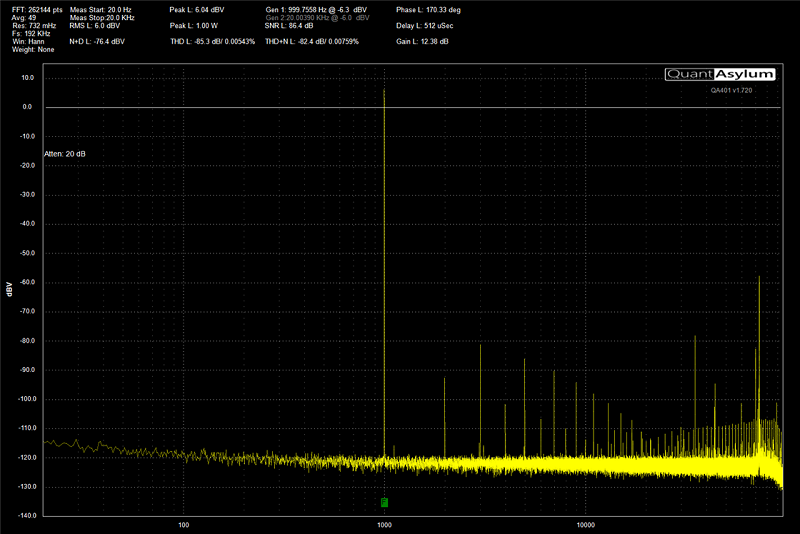
Amplifier Stereo Separation
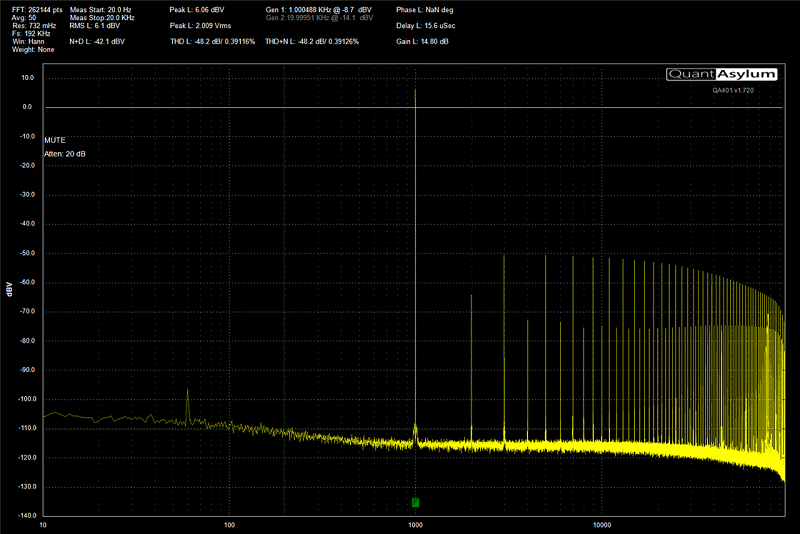
This shows the left channel output of our good amplifier when fed with a 1 kHz test tone and the sensitivity controls set to produce 1 watt (2.0 Vrms) of output.


Amplifier Stereo Separation
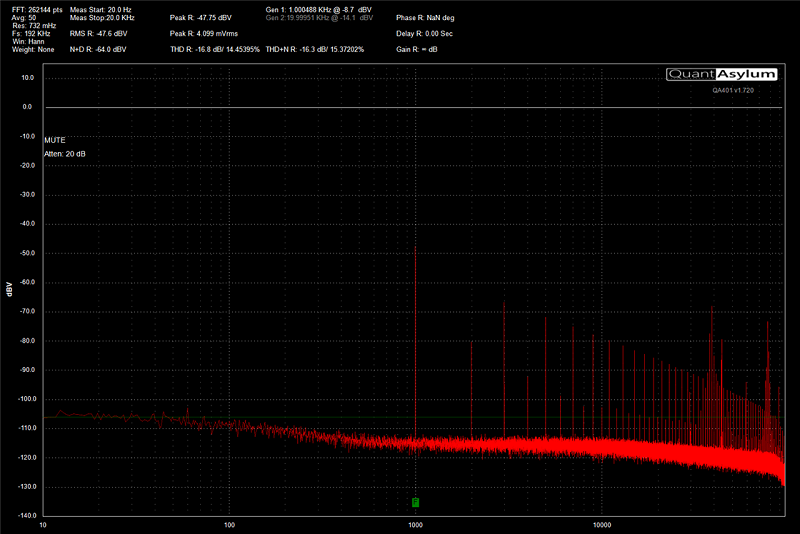
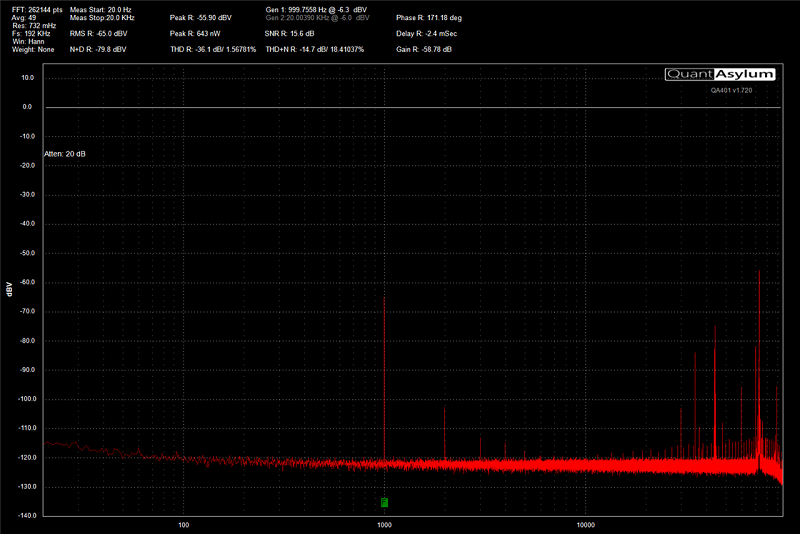
This image shows the output of the right channel output from this same amp. The level of -55.90 dB is 61.94 dB lower than the output on the left channel. This is the crosstalk or channel separation at 1 kHz.


Amplifier Stereo Separation
Here we have the same baseline test for our low-quality amplifier. It is set to produce 1 watt of output at 1 kHz.


Amplifier Stereo Separation
Here is the output on the right channel of the low-quality amp. You can see that the signal produced is 53.81 lower than that of the adjacent channel. This is 8 dB worse than the good amp shown above.

Stereo Separation and Frequency

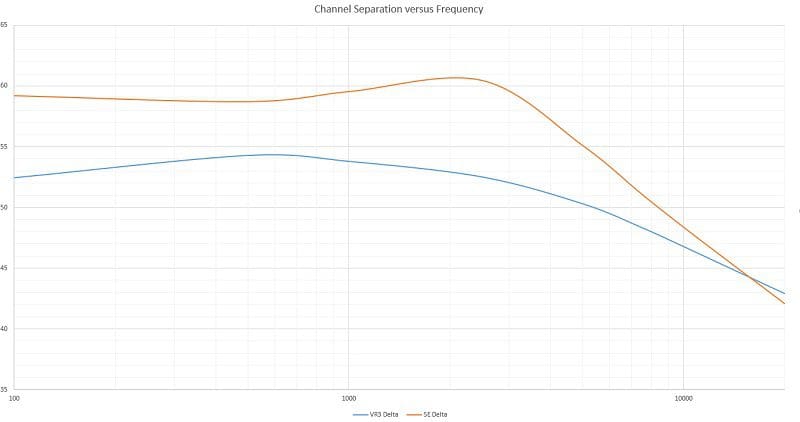
As we mentioned, crosstalk and channel separation get worse as frequency increases. We took a series of measurements for each of the amplifiers in this test and plotted their channel separation versus frequency in the chart below.
Amplifier Stereo Separation

The graph clearly shows that the signal leakage from one channel to another is very dependent on frequency. At 20 kHz, our low-quality amplifier outperforms the good amp. Since we can’t hear 20 kHz, this isn’t an issue.

What to Look for When Shopping for a Car Audio Amplifier

Very few manufacturers publish an amplifier channel separation specification. If you do find a spec, the higher the number, the better the amp will perform in terms of creating a wide soundstage in your vehicle. Your local mobile electronics retailer can help you choose a great amplifier solution and install it for optimum performance and reliability.

This article is written and produced by the team at www.BestCarAudio.com. Reproduction or use of any kind is prohibited without the express written permission of 1sixty8 media.
Filed Under: ARTICLES, Car Audio, RESOURCE LIBRARY

Product Spotlight: Drone XT GPS Tracker

Drone XT

Protecting your vehicles or equipment has never been more important, and a GPS tracking system is one of the smartest upgrades you can make. The new Drone XT from Firstech gives owners a simple and effective way to monitor the location of their car, truck or powersports vehicle in real time. Whether you want added security against theft or want to keep tabs on valuable equipment, a professional-grade tracking solution can improve your chances of quickly recovering your property. Let’s take a closer look at the new Drone XT tracking system.

What is the Drone XT?

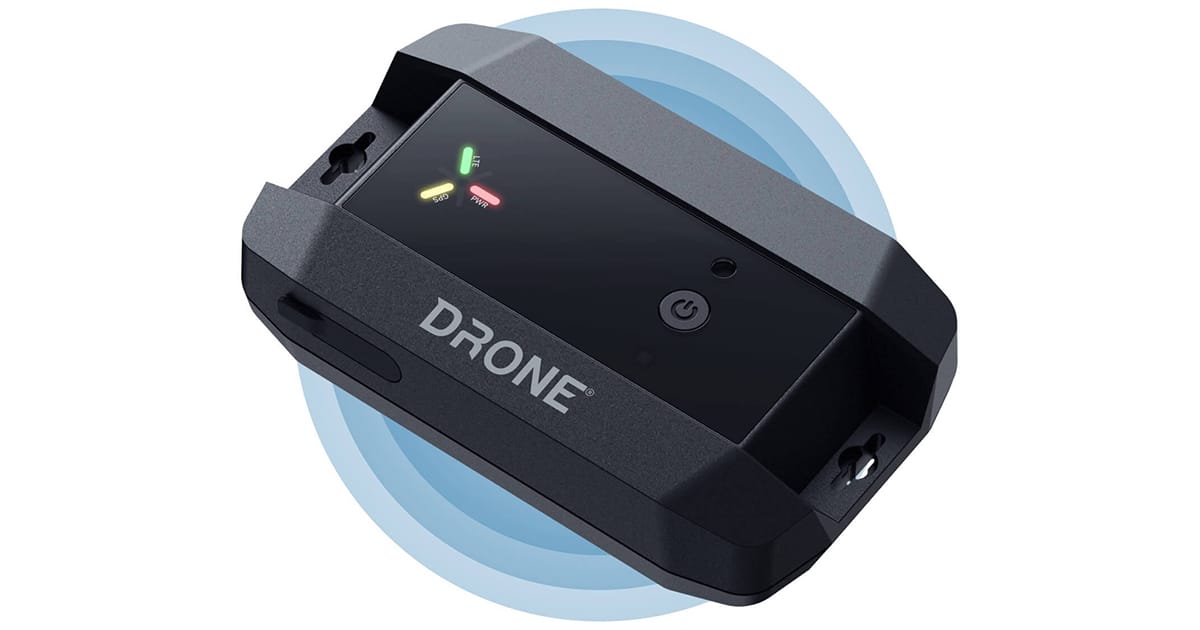
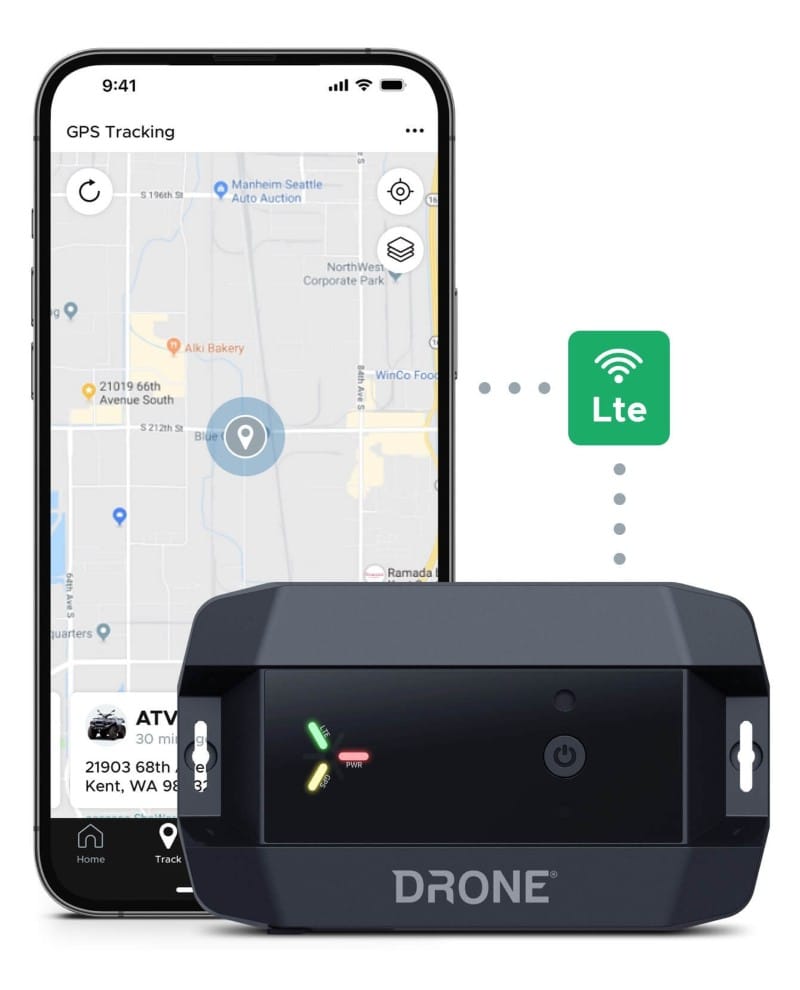
Drone XT is a self-contained GPS tracking solution that features an integrated battery for stand-alone operation. Unlike Bluetooth devices like AirTags, the Drone XT operates completely independently from other devices like a smartphone, so you can always check its location from the app or website.

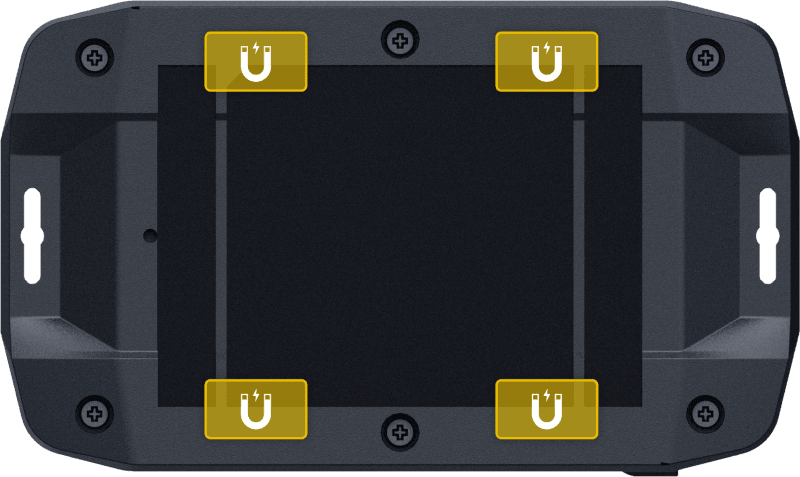
The Drone XT includes a USB-C hardwire power cable that your installer can integrate with the vehicle to power the system and indicate when the ignition is on. There’s also a dual-ended USB-C cable for charging the unit in stand-alone mode. For convenience, four high-strength neodymium magnets are integrated into the base of the unit. If you have heavy equipment to monitor, you can simply attach the Drone XT, and you are good to go.

Drone XT
High-strength neodymium magnets integrated into the chassis make installation easy in heavy equipment.

Full-Time GPS Tracking System

The Drone XT works with the Dronemobile.com website and smartphone app. You can locate your vehicle anytime you want, as long as you have access to the Internet. You don’t need to involve the police or call a phone number. You’ll know the solution is working as soon as you power it up. If you can’t check the location of your GPS tracking system, do you even know if it’s working?

When the unit is moving, the Drone system tracks location with a breadcrumb trail that updates every minute or 30 seconds, depending on the service plan you’ve chosen. Not only can you see where the device is, but where it’s been. This is great as a tracking solution for company-owned service or delivery vehicles.

Drone XT
Using the DroneMobile website or application on your smartphone, you can check the location of the Drone XT anytime you want.

Low-Power Operation

Firstech engineers have gone to great lengths to maximize the built-in battery’s longevity. The system combines a high-sensitivity GPS receiver with a state-of-the-art LTE Cat M1 cellular radio. Unlike conventional cellular radios, the LTE Cat M1 is designed specifically for low-power IoT devices like the Drone XT.

The Drone XT has power-saving modes to further extend the battery’s life. The unit doesn’t update GPS location or communicate with the DroneMobile server unless it detects motion. The “Wake on Movement” feature has a five-meter buffer, so even shifts in GPS location due to signal strength variations won’t trigger communication. If someone moves the vehicle or piece of equipment, you will be notified immediately.

The 2,200 mAh battery will last up to 3 weeks in Energy-Saving mode and up to 10 months in Deep Sleep mode.

Drone XT
The Drone XT is ideal for tracking cars, trucks, boats, powersports vehicles or commercial equipment.

Integrated Environment Monitoring

The Drone XT GPS tracker includes three additional sensors that can be configured to provide alerts to the owner. There’s a temperature sensor that provides notifications for changes by a user-configurable number of degrees. Likewise, a humidity sensor monitors moisture in the air and sends an alert if that changes by a certain percentage. Finally, there’s a light sensor that’ll tell you if someone is snooping around with a flashlight. These alerts show up almost instantly as notifications on your smartphone.

Protection For Unique Applications

The Drone XT GPS tracker is an affordable, convenient way to monitor your car or truck. However, its applications extend much farther. If you have a side-by-side, ATV or motorcycle you want to monitor, the Drone XT is perfect. Your boat, personal watercraft or trailer is also a great application for the compact tracking solution. Did we mention the unit has an IP67 rating for water and dust intrusion?

If you have a service or delivery vehicle and need to monitor its location, Drone XT is a perfect solution. You’ll know when the ignition turns on or off, where it’s located and what stops it has made throughout the day. If the vehicle is used after hours, you’ll be alerted instantly.

Drone XT
With the Drone XT, you’ll always know where your vehicles are.

Heavy equipment theft is a major issue. Protect your dozers, graders, excavators, compact track loaders and skid steers with this reliable and affordable solution.

For more information on the Drone XT GPS tracker, or to schedule an installation, contact your local authorized Drone retailer by visiting the dealer locator on the Drone website. Be sure to follow the Drone team on Facebook, Instagram and YouTube to stay up-to-date with new product releases.

This article is written and produced by the team at www.BestCarAudio.com. Reproduction or use of any kind is prohibited without the express written permission of 1sixty8 media.
Filed Under: Vehicle Security, ARTICLES, Driver Safety, Products, Remote Car Starters, RESOURCE LIBRARY Tagged With: DroneMobile

Product Spotlight: KICKER L7T Truck Enclosures

KICKER L7T Truck Enclosures

Adding a subwoofer system to a pickup truck is one of the best audio system upgrades you can make. The mobile audio specialists at KICKER have developed an entire series of truck-specific enclosures that use their world-famous square L7T thin subwoofers to deliver maximum bass. Let’s take a look at the enclosure solutions offered by KICKER.

KFDL7T102 Subwoofer System for Ford Trucks

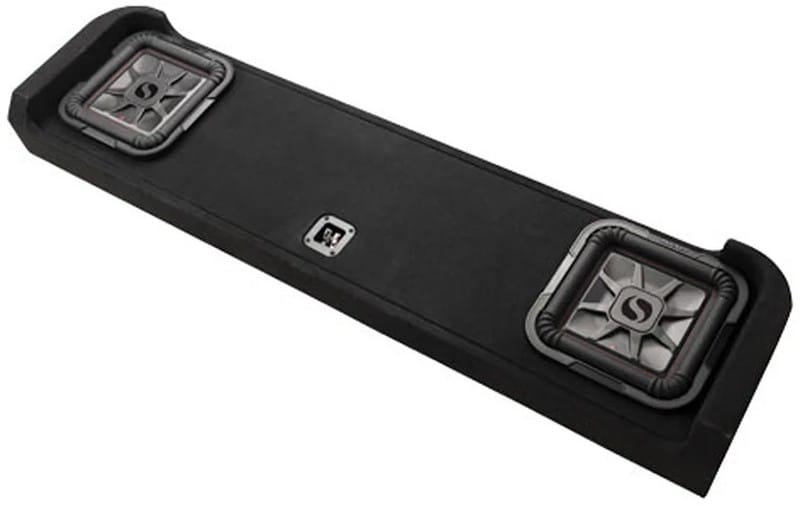
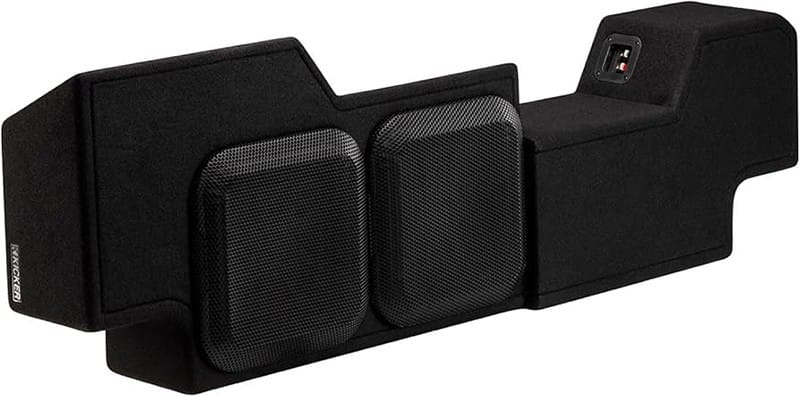
The KFDL7T102 is a dual custom-made down-firing MDF enclosure that houses a pair of 10-inch L7T square subwoofers. Combined, the enclosure can handle up to 1,000 watts of power. That’s not peak power, we’re talking 500-watts of continuous power handling per driver. That’s a great match for the CX800.1 or even better, the LX850.1 amp.

The enclosure features integrated bracing to ensure the panels are vibration-free, so your bass sounds tight and controlled. Rounded front corners match the contours of the seats for a tidy appearance and leg clearance while entering or exiting the vehicle. The system sensitivity is 87.1 dB at 1W/1M and the enclosure has a nominal impedance of two ohms.

The KFDL7T102 works with 2009 through 2026 Ford F-150 Crew Cab and 2017 through 2026 Super Duty Crew Cab trucks. Removal of under-seat items like inverters, spare tire tools or floor mats may be required to complete the installation of these subwoofer solutions.

KICKER L7T Truck Enclosures
The KFDL7T102 enclosure fits F-150 and Super Duty trucks and features a pair of down-firing 10-inch L7T subwoofers.

KGMDL7T122 Subwoofer Enclosure for Chevy and GMC Trucks

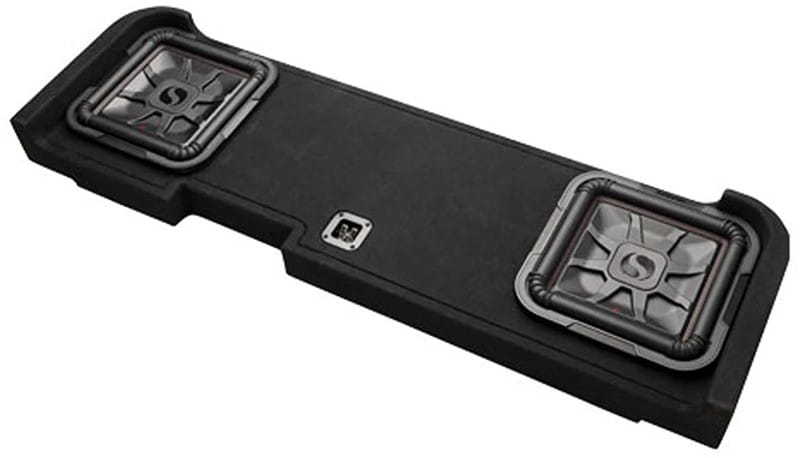
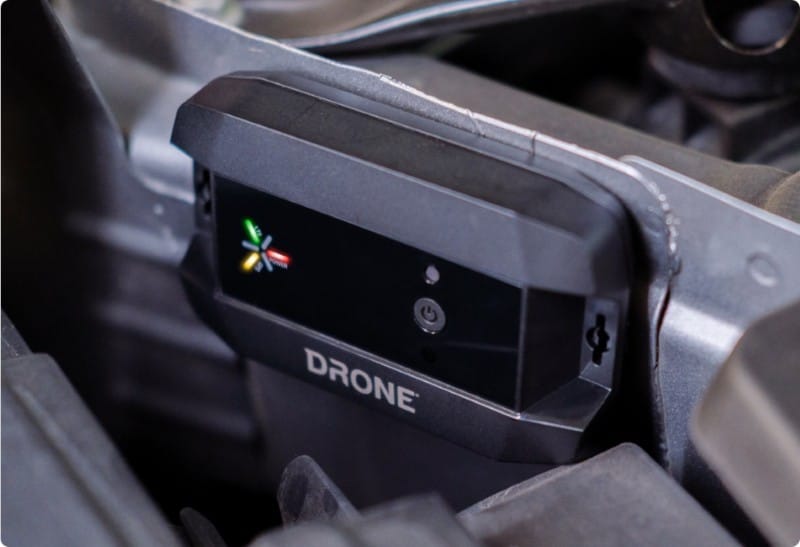
The KGMDL7T122 is another custom enclosure that is designed for 2008 and newer Chevrolet Silverado and GMC Sierra pickup trucks. The enclosure is contoured to fit the front corners of the bench seat and clear the hinge mechanism at the back. As with all the KICKER L7T truck enclosure, the KGMDL7T122 is finished in thick black carpet for great looks and durability.

The KGMDL7T122 has a pair of 12-inch L7T thin subwoofers that are wired to a nominal impedance of two ohms. Continuous power handling on the enclosure is an impressive 1200 watts, making it an ideal match for the CX1200.1 or the LX1250.1.

KICKER L7T Truck Enclosures
The KGMDL7T122 features a pair of square 12-inch subwoofers that can handle 600 watts each!

KRDL7T102 RAM Classic and K5RDL7T102 Fifth-Gen Truck Enclosures

If you own a RAM truck, then KICKER has a solution that should work with your application. The KRDL7T102 enclosure is designed for Classic-Series RAM trucks including 2002 through 2018 Ram Quad Cab, 2009 through 2018 Crew Cab, 2003 through 2026 RAM 2500/3500 Quad Cab, 2009 through 2026 RAM 2500/3500 Crew Cab and 2019 through 2024 Ram 1500 Classic Quad and Crew Cab trucks. The K5RDL7T102 enclosure is designed for fifth-generation Ram Crew Cab trucks from 2019 through 2026. If your truck has a flat floor under the back seat with no molded cup holder, then the K5RDL7T102 is the right solution for you!

Both of these enclosures feature a pair of 10-inch L7T thin subwoofers in an up-firing configuration. The subwoofers are protected with mesh grilles to protect the cones from running into the seat bottom. Power handling is 1,000 watts continuous and the system has a nominal impedance of two ohms.

KICKER L7T Truck Enclosures
The KRDL7T102 enclosure fits most RAM Classic trucks and features a pair of 10-inch L7T subwoofers.
KICKER L7T Truck Enclosures
The K5RDL7T102 features a pair of 10-inch L7T subwoofers in an enclosure designed for fifth-generation RAM Crew Cab trucks.

KTDL7T102 for Toyota Tacoma Trucks

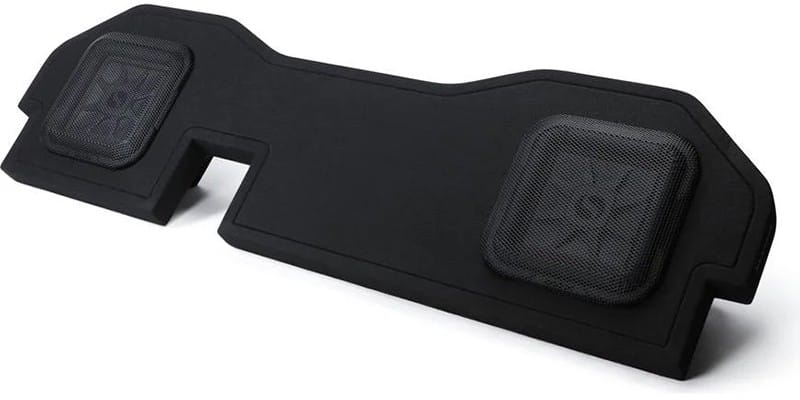
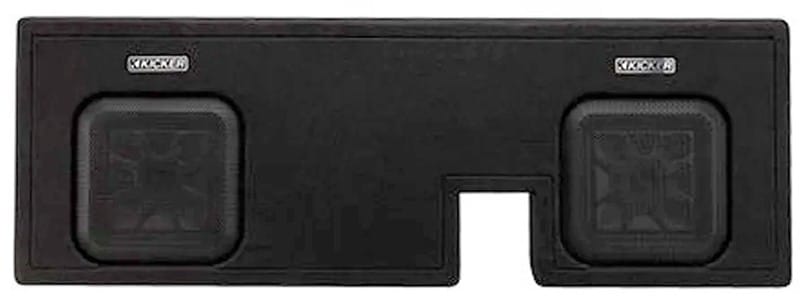
If you have a 2005 through 2023 Toyota Tacoma four-door pickup truck, then the KICKER KTDL7T102 is designed specifically for your application. This enclosure fits behind the rear seat instead of underneath it, so cab space is retained. The enclosure is home to a pair of square L7T 10-inch subwoofers and is wired to present a two-ohm load to the amplifier. A notch in the enclosure allows it to clear the split seat hinge mechanism. Grilles are included to protect the woofers.

Of course, the enclosure is wrapped in durable black carpet for a tidy appearance. A pair of KICKER badges let everyone know you are rocking bass provided by one of the best in business.

KICKER L7T Truck Enclosures
Toyota Tacoma truck owners can add the KTDL7T102 subwoofer enclosure to transform their audio system into a mobile concert.

Upgrade Your Pickup Truck with KICKER Today!

If you have a Sierra, Silverado, RAM, F-150 or Tacoma, then KICKER has a subwoofer enclosure solution that will breathe new life into your car stereo. Many new solutions are coming soon, including a tailgate subwoofer for the Jeep Wrangler! For the latest information, check out the KICKER website and be sure to follow them on Facebook, Instagram and YouTube! You can find an authorized KICKER retailer near you using the Dealer Locator on the website.

This article is written and produced by the team at www.BestCarAudio.com. Reproduction or use of any kind is prohibited without the express written permission of 1sixty8 media.
Filed Under: ARTICLES, Car Audio, Products, RESOURCE LIBRARY Tagged With: KICKER

Product Spotlight: Audison APBX 10 AS2

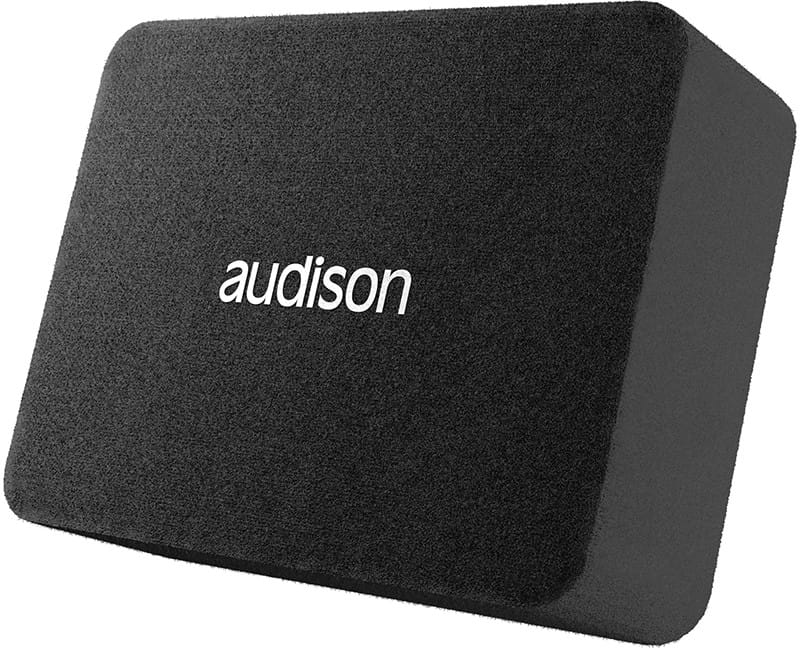
Audison APBX 10 AS2

One of the best upgrades you can make to your car audio system is to add a high-quality subwoofer. Whether you are working with a simple factory-installed radio and speaker system or planning a studio-quality listening environment, accurately reproducing bass frequencies is important. The folks at Audison have a full line of compact subwoofer enclosures that can transform your system from good to awesome. In this spotlight, we will look at the Audison APBX 10 AS2.

Features of the Audison APBX 10 AS2

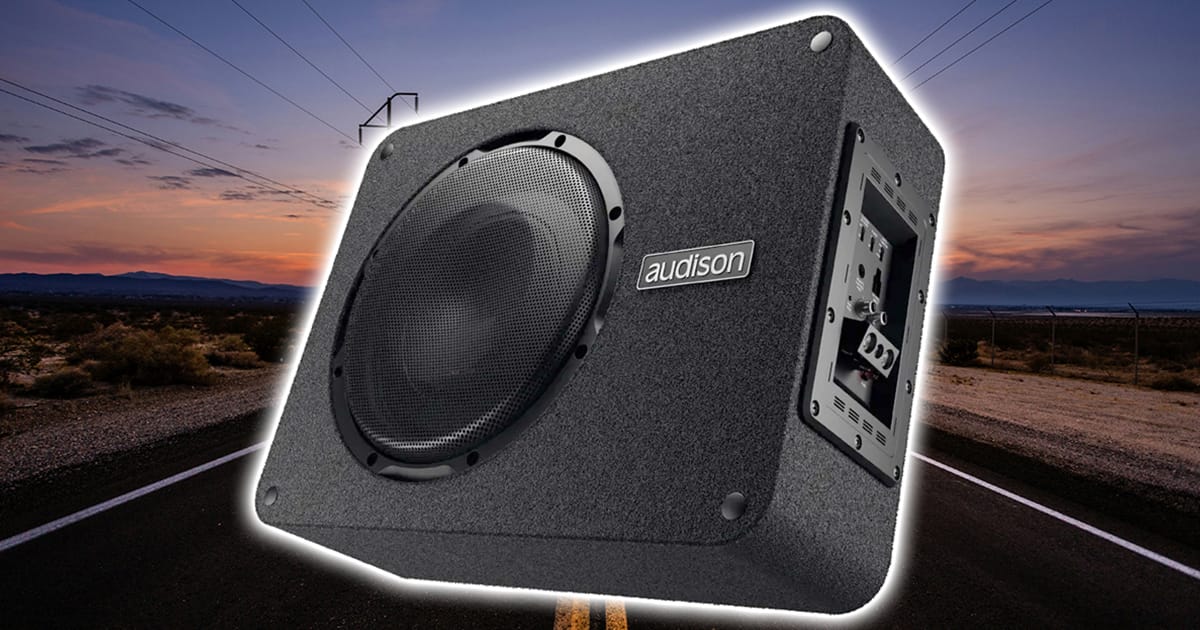
The APBX 10 AS2 is a low-profile 10-inch active subwoofer enclosure. The term “active” means this unit has an integrated amplifier. Essentially, with some wiring to feed it power and a signal from the radio, this is all you need to add bass to your car, truck, or SUV.

The enclosure measures 17.3 inches long, 13.2 inches wide, and stands a mere 6.2 inches tall. The amplifier is mounted on one of the thin side panels, and the subwoofer is designed to fire down into the floor or back wall of your car or truck. Feet are included to raise the enclosure off the floor so the subwoofer doesn’t hit anything. The enclosure has rounded corners for a little extra style.

The amplifier included with the APBX 10 AS2 is rated to provide up to 400 watts of power. Audison uses a 0.16-ohm low-impedance driver in the enclosure, so the amp doesn’t need a switching power supply. This design is said to boost system efficiency.

Audison APBX 10 AS2
The Audison APBX 10 AS2 looks neat and tidy once installed.

Amplifier and Integration Features

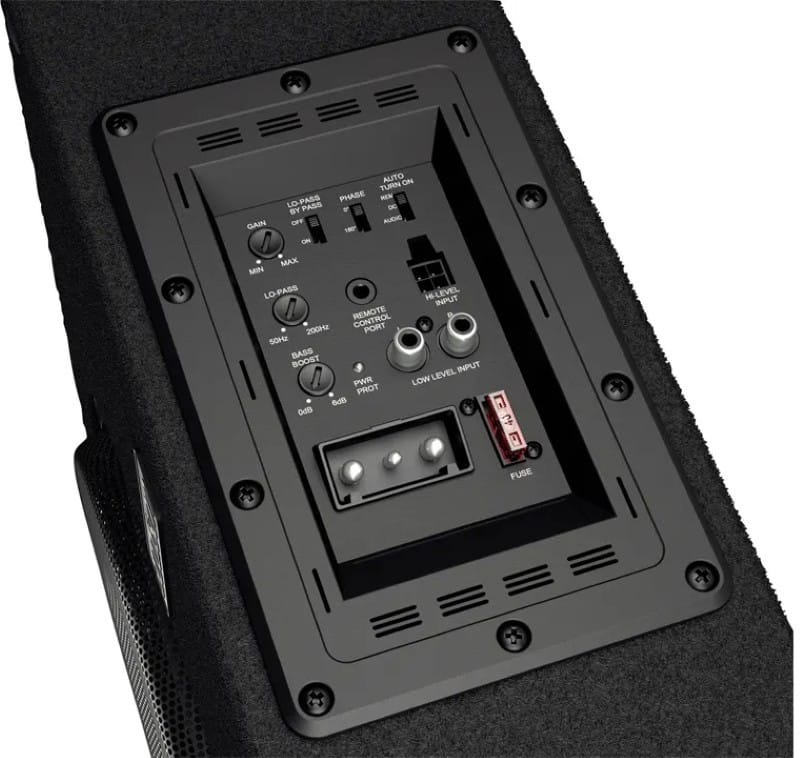
The amplifier can accept speaker-level or preamp signals to ensure integration with factory-installed and aftermarket source units is simple and reliable. In high-level mode, the amp will accept up to 8 Vrms on the speaker leads. In low-level mode, the maximum input is 4 Vrms.

The amp has a three-position remote turn-on function switch. The amp can be activated when 12 Volts is applied to the remote terminal. Alternatively, in DC mode, the amp’s circuitry will monitor the speaker wires for the DC offset voltage from a BTL amplifier. Finally, if neither of those options works with your source unit, the amp can detect an electrical audio signal to bring things to life.

In terms of signal processing, the amp has a crossover that can be adjusted from 50 to 300 hertz and features a second-order Butterworth alignment. The internal crossover can be defeated with the Lo-Pass/By-Pass switch if you have a source unit or signal processor with integrated filtering. There is also a bass boost function that lets your installer dial in a bump of up to 6 dB at 45 Hz to add a little extra thump to your music. Finally, there’s a fixed fourth-order (-24 dB/Octave) infrasonic filter set to 24 Hz.

Audison APBX 10 AS2
All connections to the amp can be remoted without tools in the event you need to free up some cargo space.

Audison includes their HRC AP remote level control with the APBX 10 AS2. This remote connects to the amp via the included 3.5mm jack. Your installer can mount the control on the dashboard or in the center console to give you control over the bass level. While the original gain setting should provide a nice balance, sometimes we want a little more or a little less bass, depending on our mood or the choice of music.

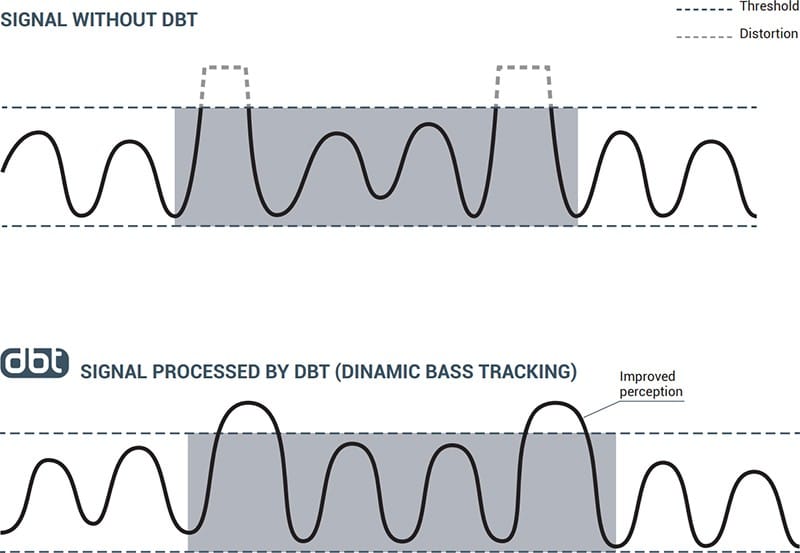
The amplifier includes a feature called Dynamic Bass Tracking (DBT). This circuitry monitors the audio input in real time to prevent signals that could cause distortion, keeping your music from sounding bad. This circuit will also prevent damage to the woofer.

Audison APBX 10 AS2
The Dynamic Bass Tracking built into the APBX 10 AS2 helps to prevent high-level transients from adding significant amounts of distortion.

Audison Subwoofer Features

The subwoofer integrated into the enclosure is based on Audison’s APS 10 series of drivers. The subwoofer features a heavy-gauge stamped-steel chassis to which a single ferrite magnet is affixed. Cooling vents in the basket, under the spider mounting plateau, help to keep the voice coil assembly cool. There are also vents in the cone to allow hot air to escape from the motor assembly.

The cone is made of pressed paper with a water-repellent coating to prevent it from absorbing moisture in humid or damp climates. A polypropylene dust cap keeps debris out of the magnetic gap and gives the driver’s face a clean, classy appearance.

Upgrade Your Car Audio System with Audison Today!

If you want to take your car audio system to the next level, drop by an authorized Audison retailer today and ask about the APBX 10 AS2 subwoofer enclosure. Audison offers a similarly designed, but slightly more compact 8-inch solution called the APBS 8 AS2 if space is at a premium.

You can find an authorized retailer using the locator tool on the Audison website. Be sure to follow Audison on Facebook, Instagram, and YouTube to learn about all the amazing audio integration solutions they offer.

This article is written and produced by the team at www.BestCarAudio.com. Reproduction or use of any kind is prohibited without the express written permission of 1sixty8 media.

Filed Under: ARTICLES, Car Audio, Products, RESOURCE LIBRARY Tagged With: Audison

Understanding the Basics of Digital Audio Files

Digital Audio

If you are in your late 40s or older, then you likely grew up with a turntable or tape player in your home as a way of listening to store-bought music. Between 1982 and 1983, the compact disc entered the market and forever changed the way music was stored and transported. In this article, we are going to look at how digital audio works and dispel some of the myths around the conversion between the analog and digital domains.

What Is Digital Audio?

Digital Audio

In the simplest of terms, a digital audio file is a representation of an analog signal using a series of digital words. In the digital domain, i.e., a computer, information can be stored as a 1 or a 0.

Computers can combine strings of 1s and 0s to represent characters in a text document, colors in a photograph, commands in a program or voltage levels in an audio file.

For decades, the standard for storing audio in the digital domain has been the Red Book Compact Disc Digital Audio (CD-DA) standard of a 44.1kHz sampling rate with a depth of 16 bits.

The sampling rate describes how often a voltage level is measured and stored. To capture the entire audible spectrum of sound, the Nyquist-Shannon sampling theorem states that the sampling rate needs to be at least twice as high as the highest frequency you want to record for it to be recreated with accuracy.

The second consideration in converting an analog signal to the digital domain is the need to store an adequate amount of resolution to properly represent the original signal. The Red Book standard uses a digital word length of 16 bits. This means that there is a string of 16 1’s and 0’s that can be used to represent 65,536 voltage levels. If you are converting the output of a microphone to digital, and the maximum voltage is 1 volt, then a resolution of 16 bits means that the resolution is 0.000015258789 volts. That’s a lot of detail.

Finally, the Red Book standard states that two channels of audio will be sampled simultaneously to create a stereo recording.

Some Quick Math on CD Quality Audio

Digital Audio

For those interested, it’s easy to calculate the effective bitrate of a CD-quality audio file. Since we sample the audio signal at 44,100 times a second, and each sample has a voltage level represented by a 16-bit word, and we do this for two channels, 44,100 times 16 times two is 1,411,200, or 1.411 kilobits per second.

To calculate how much space it would take to store a song like “Bohemian Rhapsody” by Queen, you can simply multiply 1,411,200 by the number of seconds in the song (in this case, 355 seconds) for a total of 500,976,000 bits, or about 60 megabytes of data.

How Are Digital Audio Files Created?

Digital Audio

A device called an analog-to-digital converter (ADC) is responsible for taking the analog signal and converting it into a digitally represented value. These devices are commonplace and are found connected to the microphone in your smartphone or the Bluetooth microphone in your car. They are incredibly compact and, relative to when they were first introduced, inexpensive.

ADC work in several ways, but we’ll describe the basics. Imagine, if you will, a series of comparator switches, each stacked one atop the next and referenced to an ever-increasing voltage. We’ll keep the example simple and say that we have eight switches, each of which is triggered at

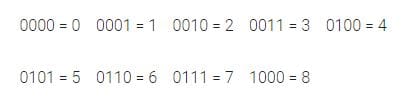
0.125-volt increments. If we feed an analog signal into our comparator switch tree with a level of 0.3 volts, the bottom two switches will turn on, and we get the digital word 0010 (which is 2). If we increase the voltage to 0.8 volts, we trigger all but the last two switches and get the word 0110 (which is 6).

Counting in Digital

Counting in digital is easy, once you understand how it works. Each space in a digital word represents a value of 2 to the power of the location. So, the first space is 2 to the power of 0, which is 1. The second space is 2 to the power of 1, which is 2, the next space is 2 to the power of 2 which is 4, and so on.

codeforarticle2

To encode a value using this format, we simply assign a 1 or a 0 to each placeholder such that the sum values represented by the placeholders with a 1 represent the original value.

codeforearticle3

In our example above, we are using a very low resolution of 3 bits, which means we can show only eight different levels. This limited resolution, of course, introduces some error – known as quantization error. The math can get very complicated very quickly. Suffice it to say that in our example, our theoretical digitizer doesn’t know the difference between a voltage of 0.63 and 0.73 volts. This is a large error and would not work in an attempt to sample audio. Luckily, our 16-bit resolution gives us 65,536 levels from which to choose.

What About Those Crazy Stair-Step Graphs?

You have undoubtedly seen marketing images showing a comparison of CD-quality audio resolution versus high-resolution 96 kHz, 24-bit audio.

Digital Audio
StairStep Graph

While the concept of having a higher sampling rate and more resolution is accurate, it doesn’t mean that the CD-quality audio signal suffers in any way.

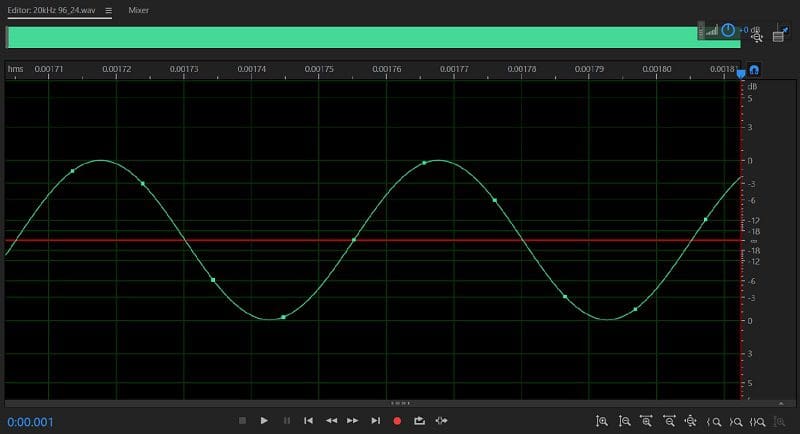
To demonstrate this, we created two 20 kHz test tones in Adobe Audition. The first track has a 96 kHz sampling rate and a resolution of 24 bits.

Digital Audio
20kHz 96-24

As you can see, the waveform looks smooth and detailed and shows roughly five samples per cycle.

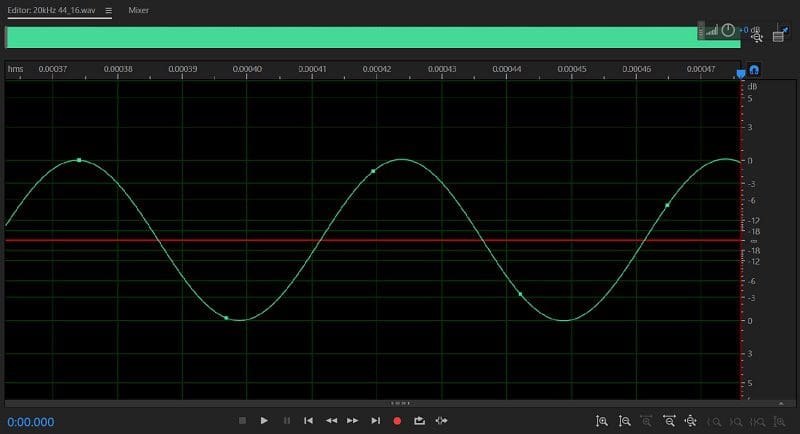
The second track is the same 20 kHz sine wave stored at a sample rate of 44.1 kHz and a resolution of 16 bits.

Digital Audio
Second Track: 20kHz 44-16

As you can see, there is no significant difference in the shape of the two waveforms. More importantly, they both look like sine waves and neither has any stepping in them.

Understanding Digital Audio

Storing audio signal in the digital domain offers distinct packaging and reliability benefits over analog storage media like vinyl records and magnetic tapes. Of course, digital files don’t degrade over time. Digital files are also impervious to playback speed issues. If your turntable or cassette deck is playing too slowly, the music won’t sound right.

In a future article, we’ll look at the file format options available for storing digital audio files. Until then, be sure to drop by your local specialist mobile enhancement retailer to see all the latest digital media-compatible source unit upgrades available for your car, truck or SUV.

This article is written and produced by the team at www.BestCarAudio.com. Reproduction or use of any kind is prohibited without the express written permission of 1sixty8 media.
Filed Under: ARTICLES, Car Audio, RESOURCE LIBRARY

  • « Previous Page
  • 1
  • 2
  • 3
  • 4
  • 5
  • Next Page »

About TNT Audio

TNT Audio & Security has been a trusted name in mobile electronics and custom installation in Victoria, Texas since 1997. For nearly three decades, our team has helped drivers … [Read More...]

Recent Articles

A hand on a volume dial

Why Can’t I Turn the Volume on My Factory Radio All the Way Up?

October 4, 2026 

Whether the sound system in your car or truck is bone stock or upgraded with premium amplifiers, speakers and subwoofers, the system’s maximum volume may not directly coincide with … [Read More...]

A blue motorcycle with audio gear around it

KICKER Harley-Davidson Audio Upgrade Kits

September 28, 2026 

KICKER is well known for its car audio, marine and powersports audio upgrade solutions. Continuing that tradition of impressive performance and value are four newly upgraded audio … [Read More...]

The DroneMobile XC2

Product Spotlight: Drone XC2

September 21, 2026 

These days, security is top-of-mind for vehicle owners. The team at Firstech addressed this several years ago with their impressive Drone XC LTE-connected dash camera and vehicle … [Read More...]

A car audio amplifier

How Does a Car Audio Amplifier Work – The Power Supply

September 6, 2026 

We’ve talked about car audio amplifier features and specifications at great length, but up to this point, we haven’t discussed how a car audio amplifier works. In this article, … [Read More...]

The Hertz Venezia V5

Product Spotlight: Hertz Venezia V5

August 24, 2026 

In terms of marine audio solutions, the team at Hertz has developed source units, speakers, tower speakers, subwoofers and accessories that will make any voyage more enjoyable. … [Read More...]

Subscribe!

Enter your email address to subscribe to our website and receive notifications of new posts by email.

Join 1 other subscriber

Testimonials

No Pressure

Reasonable prices and they listened to what I needed and did not try to sell me on products or services, no pressure. Larry is a very good salesperson!

Expert Knowledge

Hands down the best place to go to for audio and security. I've had 4 vehicles done here. Two 2010 Dodge 2500, an RV, and Scion TC. Larry always takes care of it. Quality work, outstanding service, expert knowledge.

These Guys are Great

They listened to my needs and went above and beyond to make it happen. These guys are great

Customers Leave Satisfied

Great selection and awesome customer service! 🙌🏽 Could not find these items ANYWHERE until I came to TNT Audio and Security. They are really informative to make sure you get what you want/need AND dedicated to ensure their customers leave satisfied.

Subscribe to Our Website

Enter your email address to subscribe to our website and receive notifications of new posts by email.

Location


Get Directions to 1sixty8 media

Services

  • Car Audio
  • Custom Installation
  • Marine Audio
  • Vehicle Security

Hours

Monday, Tuesday, Wednesday, Thursday, Friday9:00 am – 6:00 pm

Copyright © 2026 TNT Audio & Security · Privacy Policy · Website by 1sixty8 media · Log in

Loading Comments...